
And why I found myself speaking about that in front of a jury,
after visibility itself became unsafe for me.
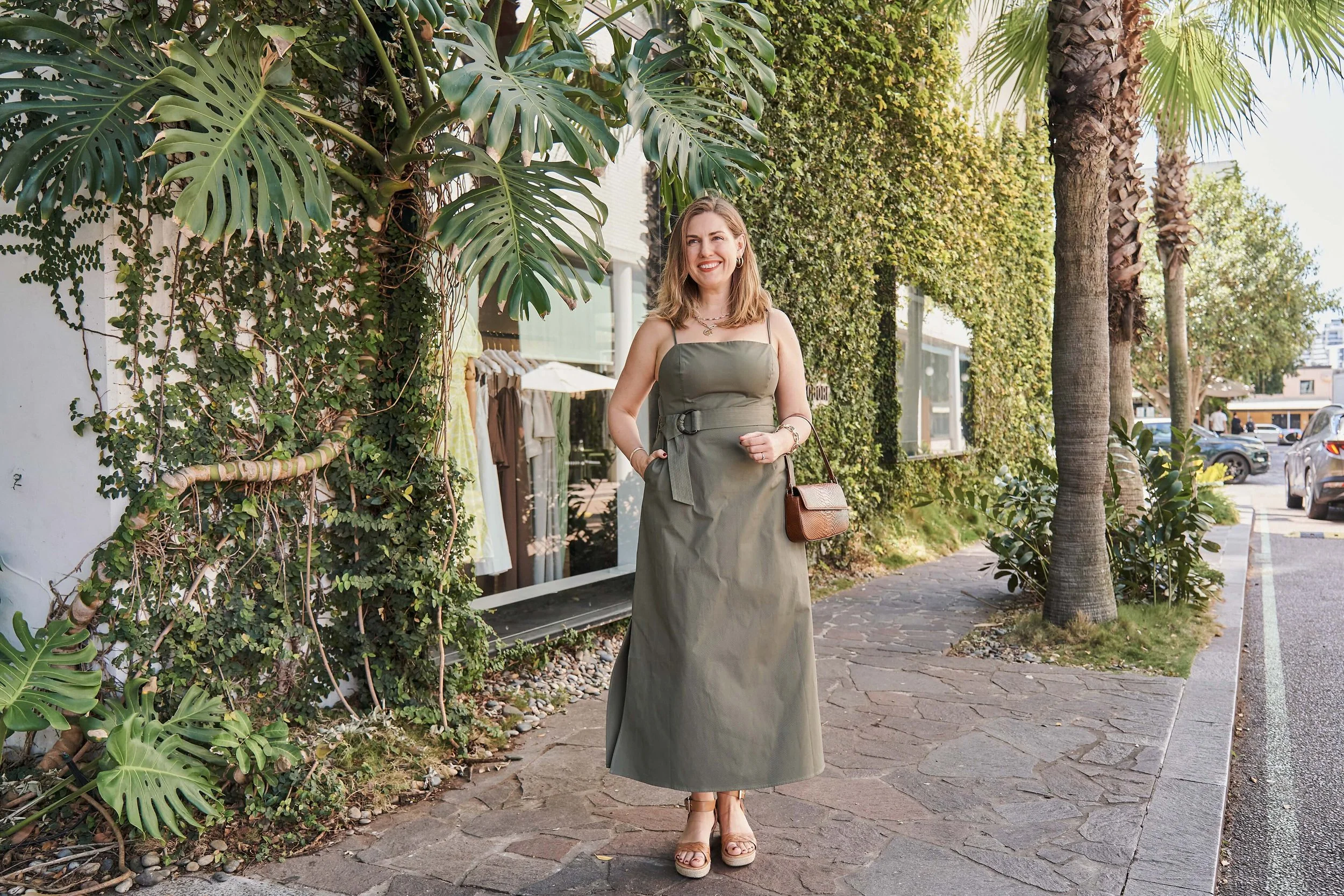
Blog by Imogene Whittle, Personal Stylist & Spree with Me Founder.
Last week, I found myself sitting in a courtroom speaking to the jury about something I had never expected to have to defend: my freedom to be visible.
Wow. And of all the people in all the world whose lap this responsibility could have fallen on, the fact that it was mine is an irony worth mentioning. Because visibility is something I think about every day. As a personal stylist, I support women who want to feel more confident being seen, expressing themselves and taking up their place in the world. I’ve always been a strong believer that visibility, the way we dress and choose to show up in the world is a choice - or it should be.
So what happens when someone else makes visibility feel unsafe?
That question has become much more personal for me over the past few years and, recently, led me into a courtroom.
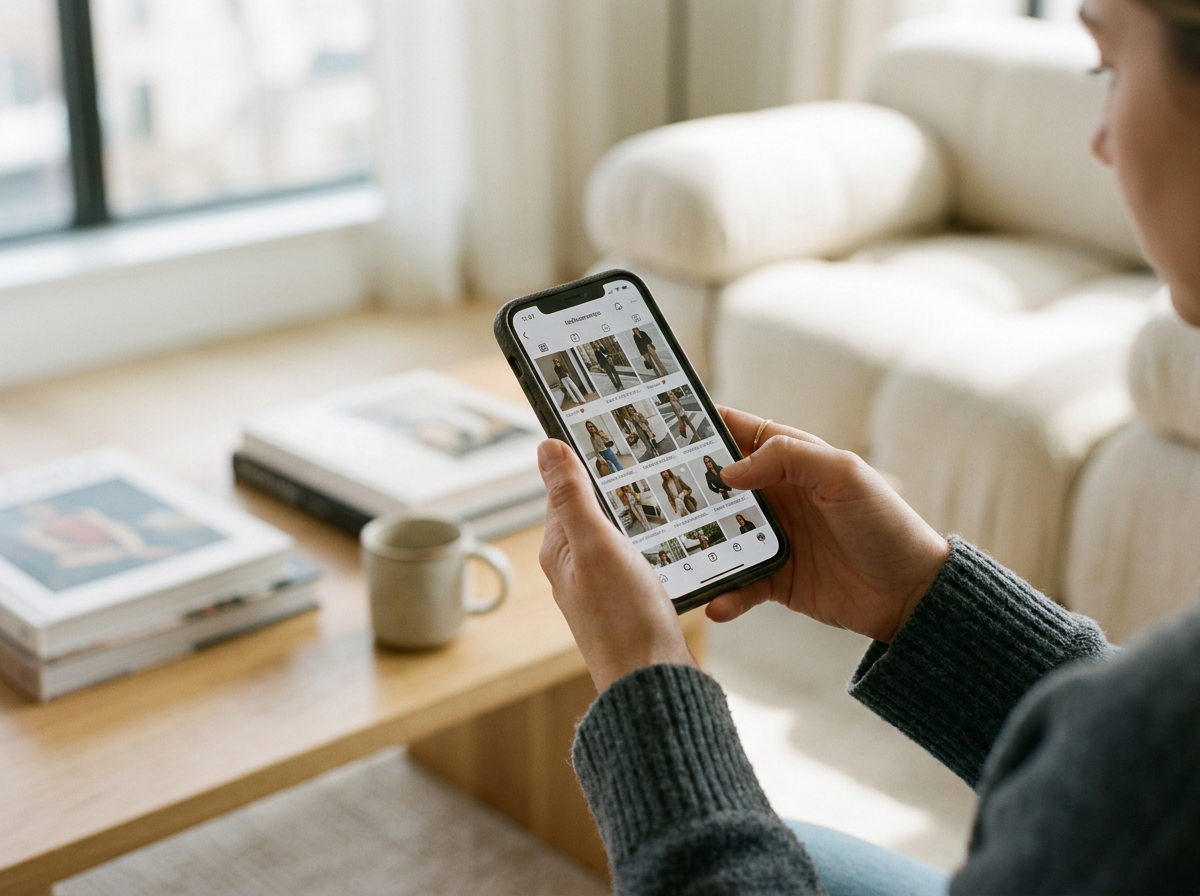
I gave evidence as a victim and witness in the Queensland criminal proceedings involving deepfake sexualised images and image-based abuse. Years ago, a photograph of me was taken from an ordinary fashion event public photo by someone unknown to me and manipulated into sexualised deepfake material without my consent. What followed affected far more than just my personal experience.
There was nothing extraordinary about the photograph of me that eventually became relevant to these proceedings. I had attended a public event and had my photograph taken.
In following news articles, he was reported saying said: "Every woman on Earth should live in fear of a camera, should live in fear of Facebook”.
I couldn’t stop thinking about, not only because of what had happened to me, but because of the much bigger implication contained within it.
Women should not have to make ourselves smaller because someone else might misuse our image. We should not have to share fewer photographs, become less public or accept the sexualisation of our images without consent as the price of being visible.
And what do we tell girls growing up in a world where creating a convincing fake image of someone is becoming extraordinarily easy? Surely the answer cannot be to teach women and girls to disappear.

Visibility is something I think about every day.
When simply being visible becomes a vulnerability
Being photographed is also a completely ordinary part of my professional life. I run Spree with Me personal stylists and my work involves fashion, social media, events and helping other people feel confident about how they present themselves.
Every day I continue to support women to feel more comfortable being visible, while I myself was dealing with the consequences of fear influencing behaviour impact my own choices about how visible I wanted to be.
For too may years, I second guessed how I felt about photography and creating videos of myself. Even the clothing I chose and my self-expression became tangled up in it.
To say I have gained some insight into the power of visibility, what it means to have that agency taken away, and what it takes to reclaim it, is an understatement. I’m reclaiming how I present myself to the world through this business.
“To say I have gained some insight into the power of visibility, what it means to have that agency taken away, and what it takes to reclaim it, is an understatement.”
Imogene Whittle
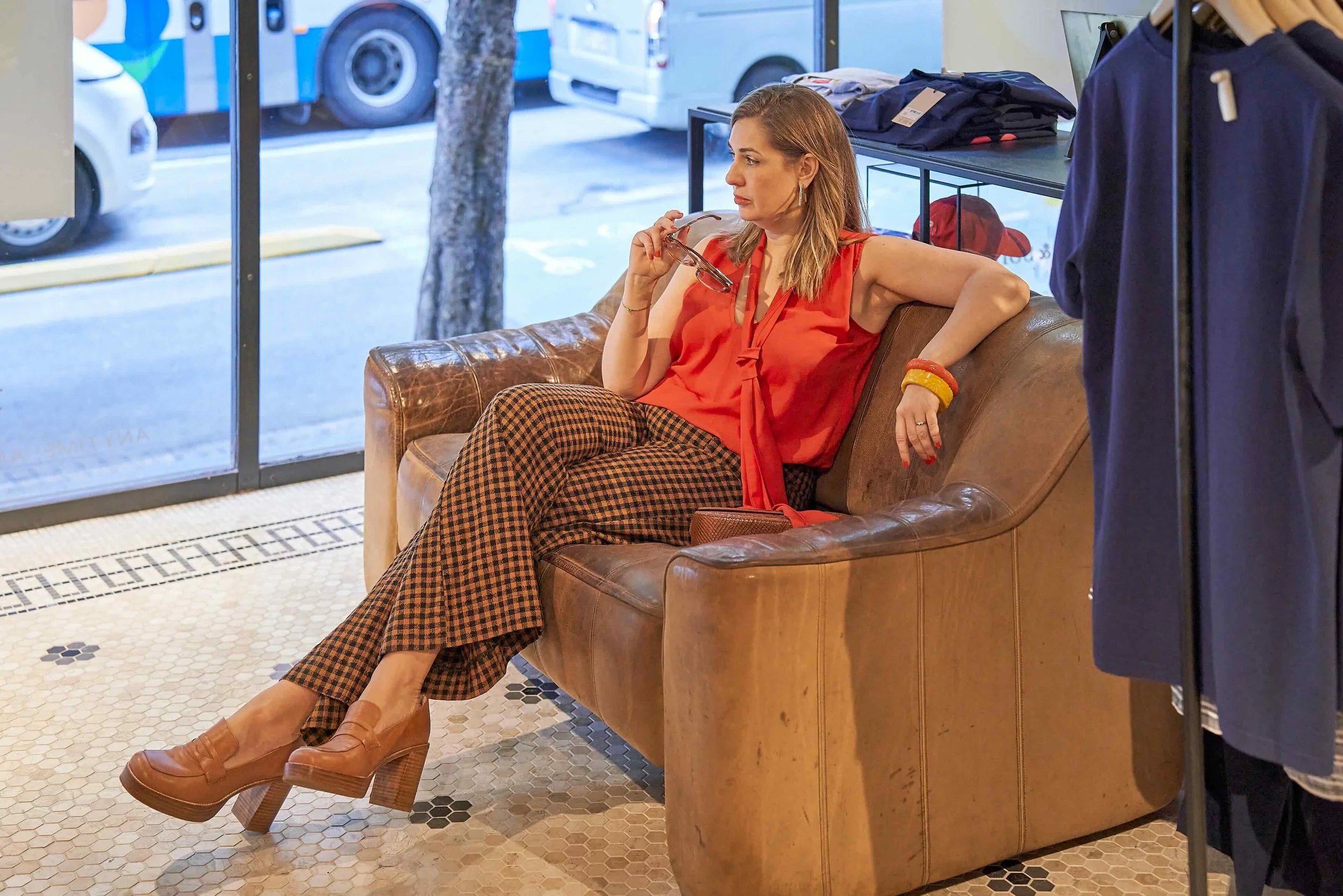
The burden cannot keep falling back on women
We’re already accustomed to being given instructions about how to keep ourselves safe. We think about where we walk, how we’re getting home, whether we should go somewhere alone, what we’re sharing online - on and on are the countless other small calculations that become so routine we barely notice ourselves making them.
But there is something new and deeply troubling about adding another instruction to the list: be careful about being seen.
Deepfakes have changed the stakes, but I don’t blame the technology. I blame the people who choose to use it this way.
If the response to that reality is that women should change their behaviour, become more cautious, more private and less visible, then technology that should be moving society forward risks pushing women backwards socially. That genuinely scares me.
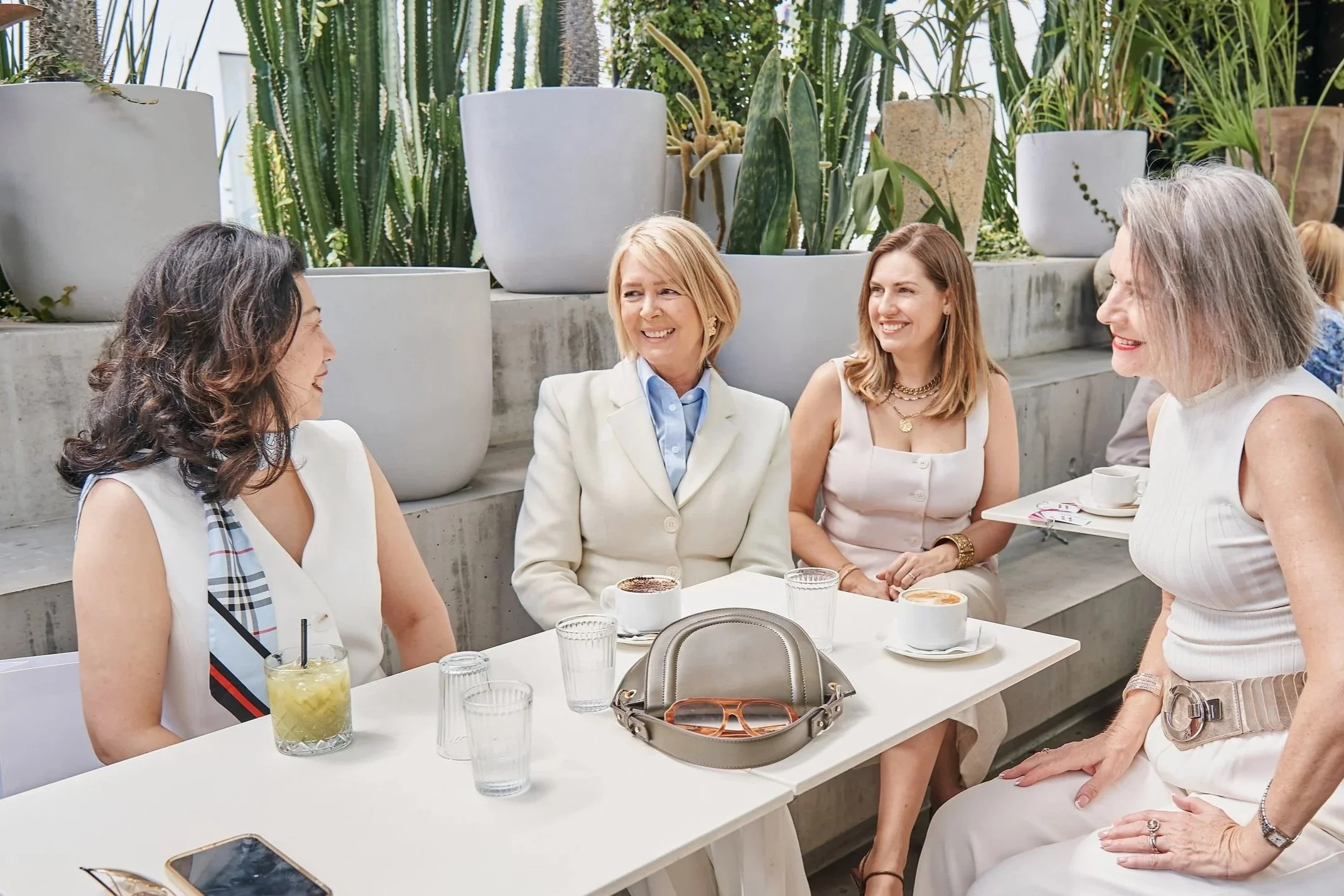
Celia, Karen, Imogene & Ann. A quiet moment at a past photo shoot.
I have daughters. I think about the world in which they are growing up, and about what it would mean if deepfake pornography became so normalised that girls simply learned to factor the possibility of sexualised manipulation into being photographed.
I don’t want that freedom to quietly disappear for them, for us, or for future girls and women.
Being seen isn’t vanity
And yet women’s desire to be seen is still surprisingly easy to dismiss as vanity, particularly as we get older.
In my work, I see women who feel increasingly invisible as they get older, women who have consciously made themselves less visible, and women who are doing exactly the opposite: becoming more colourful, expressive and unapologetically themselves. I’ve always loved that last one.
But there’s an important distinction underneath all of this. Being visible should be a choice. So should being private.

Get help to define your style, declutter your wardrobe, curate new outfits from what you already own, identify what’s missing and receive a ‘wishlist’ of recommended items.

Effortlessly update your style in a way that’s modern, authentic to you and supports your lifestyle.
Regaining the choice
One of the most difficult things for me to articulate throughout this experience was the sense of having choices taken away from me.
In my victim impact statement, I eventually found the words for it: “He stripped me of more than just my dress. He stripped me of my agency, my confidence, of trust, of liberty to choose.”
For a significant period, fear had a vote in decisions that should have been mine. I’ve worked to regain that sense of agency and confidence.
@imogenestylequeen Doing all I can to set the standards i want to see for the future. #ladyjustice ♬ Unstoppable - Sia
That doesn’t mean pretending nothing happened. It doesn’t mean never feeling vulnerable, or deciding that every woman should respond to image-based abuse by becoming defiantly public. That would simply be another way of telling women how they are supposed to behave.
For me, regaining agency means being able to make those decisions for myself again.
How visible do I want to be?
What do I want to share?
How do I want to present myself?
Those choices are mine, and now the law is standing behind that right.
Showing up
‘Show Up’ has been my word of the year. It’s been relevant to many facets of my life at the moment, and boy did I show up on the day of the court hearing; perhaps we can chat about that in person…
After I spoke to the jury and gave my evidence, I knew I wanted to say something publicly about the day without discussing the evidence itself. I made a short video. I walked out of court and found myself near a statue of Lady Justice. I had a celebratory coffee in hand, and with Lady Justice behind me, it presented an opportunity too good to ignore. I raised my cup and cheers’d “Lady Justice. I showed up for you and all women today.”
And then I got ready and went to Brisbane Fashion Festival. I got back on that horse, so to speak - and stood in front of a photo wall again.
I hope the next person thinks twice
The criminal proceedings have now concluded. He was found guilty of all charges in this case and sentenced to imprisonment. The new laws have since been passed. A new precedent is set, with national and potentially international precedent for others.

This moment photo wall moment and attending Brisbane Fashion Festival felt much more significant than it looked.
There’s been separate Federal Court action brought by Australia’s eSafety Commissioner in relation to non-consensual intimate deepfake images, resulting in significant civil penalties.
I hope that this now is a strong deterrent for anyone considering creating, manipulating or sharing sexualised images of another person without their consent sees that there can be serious consequences for doing so. Please spread this message.
The outcome I care about extends beyond courts and laws.
For years I’ve been scared about a future where deepfake pornography becomes normalised, for myself, for my daughters, and for girls and women more broadly. I am still concerned about what that future could mean for our freedom to be visible.
Women should be able to build businesses, share ideas, have social media accounts, participate publicly, take photographs, appear in photographs, express themselves, dress how they choose, grow older loudly or quietly, and decide for ourselves how much of the world we want to occupy. And I’m here by your side to do that.
Some women will choose privacy. Others will choose enormous visibility. Most of us will move between the two throughout our lives.
By participating in this case and speaking about its impact, I know I’ve played a part in making freedom of visibility safer for women who come after me.
We have the right to be seen, we have the right not to have to play small, and we have the right to safety in visibility.
About Spree with Me:

Dress to suit you, your lifestyle, your life goals. Get matched with a personal stylist at Spree with Me to discover your signature style and update your look to feel confident, vibrant, and visible.
Spree with Me personal stylists makes personal styling easier and more enjoyable than ever.
We can support you with personally curated style updates, wardrobe styling at your home, colour consultations, or fun days out celebrating and learning about styling with friends on a group shopping tour.
Each personal stylist on the Spree with Me Style Squad brings niche expertise in fashion styling, image consultation, colour analysis, and guided shopping experiences.
Personal styling is no longer a luxury reserved for the rich or famous; it’s an empowering experience available to everyone. Our stylists are located in Brisbane, Melbourne, Perth, Gold Coast, and now Tokyo!